Life Coaching
Organizational Design & Development
Conflict Resolution
Right To Joy logo

4 Tips for Glimpsing the Future

http://www.bigfoto.com/miscellaneous.jpg

What do you see as the greatest source of uncertainty in today’s world?

Certainly, driving forces such as digitization, globalization and individuation top most thought leaders’ lists as contributing to the planet’s increased volatility and complexity.  However, at the root of human uncertainty is a recognition that our timeworn formula of reflecting on past experience in order to predict future performance no longer works in today’s world.  How we learn about and adapt to the future has dramatically shifted.

In the tradition of reflecting on past experiences in order to best guess the future, we relied heavily on analysis and critical thinking.  Most people would agree that today’s unique challenges are not solvable with strictly rational thought models.  Hence necessity requires us to shift from a predominantly rational model of understanding the world to one where intuition and imagination are key initiators.

Currently, I am in deliberation with colleagues around this very topic.  As action researchers, we understand the need for both intuitive awareness and reflective rationalization to enhance our adaptability to disruptive revolutionary change.  Nonetheless, trying to catch a glimpse of the future so we can begin to respond differently in the present first demands intimate awareness of emerging opportunities.  These ‘early warning signs’ often come in the form of intuitions, which are not provable by standard measures, that is, past experience or rationalized data.  Rather than the traditional rational change cycle (observe, reflect on the past, plan and act), Scharmer proposes an intuitive cycle for learning from the future and creating revolutionary transformation — observe, create space for inner knowing (intuition), act and integrate these new experiences into new routines.  And by the way, do all of this from the loving intent of helping others to fulfill their potential.

For those of us who spent the first half of our careers exercising our rational mind, we have since had to develop a practice of accessing and trusting our intuitive mind.  How does one go about doing that?  Below are the stepping stones.

1.  Quiet your mind.  

If you cannot create the mental space for silence, you will not be able to hear your ‘whispers of inspiration’ among all the internal noise and chatter of what I fondly refer to as my monkey mind.  I meditate daily for 30 to 60 minutes, which calms both my mind and body allowing me to listen to my inner knowing.  If meditation does not suit you, then go for a walk in nature, garden, paint, do yoga or find an activity that provides inner peace and contentment.  Whatever the activity, make it part of your daily routine.  The more you practice, the better you hear.

2.  Pay attention.

In the early days of my own practice, I doubted what felt unfamiliar.  At first, I did not recognize the difference between intuition (my inner truth) and monkey chatter (my brain’s processing of information) so I made a deal with the universe — if you knock twice on my door with the same message, I will act on it.  Sure enough, this intuitive formula worked brilliantly.  I still use it today

3.  Act on your inner truth.

Fundamentally, taking action based on our inner knowing is being true to our authentic self.  If you have repressed your authenticity, responding to it now will feel as though you are losing your identity.  Instead, what you are losing is a patterned way of behaving that no longer serves you well.  You may also encounter the resistance of your ego, which is not who you are so let it go, too.  Just so you know, the more I acted on my inner truth, the kinder and more loving I behaved.  Here is where our loving intentions for others and ourselves flourish.

4.  Accept the results.

No matter what emerges from the actions based on your intuition, accept the outcomes.  In our shortsightedness as humans, we do not have nor can we see the whole picture.  Consequently, I have been led not always where I might have otherwise chosen.  However, as the circumstances unfolded, I discovered (much to my relief and joy) it was exactly where I needed to be to receive and achieve what I desired.  Remember, there are many routes to a chosen destination.  Why not take the route where the universe’s support is sure to be provided.

Or, you can choose to continue to push a boulder up a hill.  Myself, I prefer less effort and more joy including a feeling of comfortable knowing about the future.

What one intuition can you act on today to bring greater authenticity and certainty about the future?

Sources:

Scharmer, Claus Otto. 2000.  Presencing:  Learning From the Future As It Emerges, Presentation at MIT Sloan School of Management, OSC, October.

Are You a Suppressor or an Expresser?

http://www.bigfoto.com/themes/nature/geology/geyzer-bz8.jpg

As most of us are aware, emotional repression — the conscious or unconscious suppression of painful impulses, desires, or fears — leads to, at its least, defensiveness and, at its worst, disease.  The list of ailments is a long one but for starters stress, depression, short-term memory loss and addiction are commonplace.

Wilhelm Reich, an Austrian psychiatrist, conducted investigations into the correlation between emotional make up and physical musculature.  He generally found that his patients with repressed emotions evidenced this in their body structures through tightened, contracted muscles.  Various emotions, which were “held in”, related to specific muscles.  If the tensioning of these muscles was not released by other means, muscular rigidity set in place, and, with continued suppressive behavior, became permanent.  Reich termed this phenomena “muscle armoring”, an analogy to the metal armor of a medieval knight.  Reich saw the contractions of muscles as an “emotional armor” protection created by mind and body, caused from emotional defensiveness.  Gary Meale

Beyond the many physical and mental ailments associated with emotional repression is the added loss of creative energy.  When the mind, body and spirit are held captive by channeling all their energy into repression, there is no space or vitality available for inspiration, creation and transformation.  And it is exactly these qualities that are critical for navigating the inner and outer uncertainty and chaos in which we all share.  The conundrum we are faced with is — How do we transform from suppressors to expressers?  By the way, this is a global phenomenon.  No one culture or nation has the suppression market cornered.  Around the globe, we are all equal opportunity repressors.

As humans, many of our emotional stories (wonders and wounds) entered our lives when we were infants (birth to 5 years) and were unable to express our experience adequately in words.  I often say to my clients who are struggling to understand their own conditioned childhood emotional repressions, “children are great observers of life, but poor interpreters.”  As children, we had neither the experience nor the language to help us discern what was truly happening.  These childhood reactions to our experiences when left unattended and misunderstood become embedded in our psyche as conditioned responses to similar events.

As an example, a child who has a frightening experience with a dog is likely to generalize this fear to all dogs unless we take corrective action.  Add such messages over the years as — “Little boys don’t cry.”  “If you show your feelings, you show your weakness.”  “There’s no place in business for emotion.” — and the result is a society fearful of feelings.

A true measure of this outcome is the ‘culture of conflict avoidance’ experienced in today’s families and places of business.  Interestingly, if we are unable to allow and express conflict, we also inhibit innovation.  Our ability to innovate by coming up with new solutions correlates directly with our ability to adapt to our rapidly changing global circumstances.  Coming up with new solutions to the new problems of today’s world occurs through constructive conflict.  Challenging the status quo begins the process of releasing old beliefs and patterns of behaviour and exploring new ones that better serve our current needs.

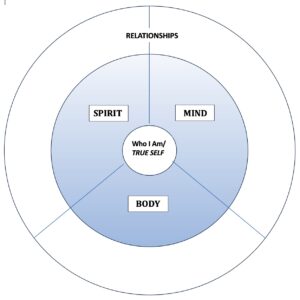
The true blessing Life bestows on us, often in spite of our best or worst efforts, is the fact that we are whole beings (spiritual, physical, intellectual, communal and emotional).  When we ignore any one aspect of the SPICE of living, we fall out of balance.  And when we are out of balance, we fall sick or run into roadblocks.  Illness and dead-ends are nature’s or Life’s way of telling us to seek balance.  Keep in mind we are always given early warning signs which alert us when we are tipping the SPICE scale too much in one direction.  (If you are interested in a free SPICE assessment, you will find it under my Joy Tools to the left of this blog.)

A truth that I now take to be self-evident is repression never remains silent.  As humans, we are wired to release from our beings what causes us dis-ease so that we can be co-creators in our world.  I wrote the poem below as homage to this deep, programmed desire for creation.


X-press

Like lava pressured to the surface
from the earth’s core, every act of creation
uncovers what wants expressing.

It wills to be released.
It wills to be known.

The stuff of life is contained deeply within
but no thing can remain forever hidden.

First, come the internal stirrings
of calamity, chaos and confusion.  All
energize awareness, wanting acceptance.

Then, if allowed, the birthing of an idea
breaks through and a union with mystery
reveals the once unknowable
expressing such beauty as the stars.

March 2012

With awareness and creative practice, we have the potential to know the unknowable. However, knowing requires us to accept what shows up in our lives no matter what feelings or fear arise and then to use this ‘material’ to understand and create what is needed.  Creativity requires regular practice in order for us to continually express what lies buried deep within. Without a creative practice, we continue to withhold expression, which impacts all aspects of our being, and thereby removes spice from our lives.

What creative practice do you most enjoy?  How often each day or week do you allow yourself this expression?  What would it take for you to make this a weekly, even daily practice?

Design Principles for Relating, Working and Leading

http://www.free-pictures-photos.com/construction/construction-uw8u.jpg

I am freshly home from the Organization Design Forum held in Atlanta, Georgia, where my colleagues and I presented some of our ‘discoveries’ on the changing nature of organizational design in today’s New Normal business environment.  As Socio-technical systems (STS) designers, we are dedicated to co-designing humane enterprises and to optimizing both their social and their technical systems.  However, most STS practitioners would agree the enterprise’s technical system historically received greater attention and resources.  In fact, both the enterprise’s social system and governance system were and still are often overlooked or less understood.

In response to this perceived gap, we are re-evaluating and expanding upon the standard set of STS design principles to include –

1)  principles for relating and interacting with each other;
2)  principles for how the work gets done; and
3)  principles for governing (leading) the enterprise.

In last week’s blog, Coming Together, Staying Together, Working Together, I outlined a first attempt at articulating the design principles for building the interactions and relationships within the client system.  They are more concretely stated below along with principles for designing the enterprise’s work and governance systems.

Principles for Relating:

Connect  -  Bring all the voices (stakeholders) into the room
Converse  -  Ensure everyone has the opportunity to speak
Collaborate  -  Set positive intentions and appreciate strengths
Co-create  -  No design is imposed

Principles for Working:

Specify  -  Minimal critical requirements
Optimize  -  Social, technical and ecological well-being; simultaneous efficiency and innovation
Coordinate  -  People doing the work coordinate it
Inform  -  Primary user first, then all stakeholders
Match  -  Authority and resources to whole-task accountability
Maximize  -  Diverse, multi-functional teams; variety, learning and meaningfulness
Align  -  Support systems to work design
Prototype  -  Often, rapidly and continuously

Principles for Leading:

Self-regulate  -  Lead and follow as required
Distribute  -  People doing the work control it
Serve  -  Values aligned with social, technical and ecological well-being (i.e., humanity, nurturance, beauty, community)

The underlying purpose for utilizing these principles is to guide the design process in the co-creation of humane enterprises, which ultimately form cohesive, compassionate communities.

Use the principles above as a checklist to evaluate the capability of your workplace’s social, technical and ecological well-being.  Where does its strengths lie?

Coming Together, Staying Together, Working Together

In today’s rapidly changing iVUCA (interconnected, volatile, uncertain, complex and ambiguous) world, the art of building relationships in order to co-exist in community is fundamental for both surviving and thriving.  Global agreement, in principle, supports “the quantity and quality of social relations” as a key indicator of our happiness.  Now, we just need to get our act together by allowing our behaviours to catch up with our beliefs.  As Henry Ford (1863-1947) so aptly put it, “Coming together is a beginning; staying together is progress; working together is success.”

http://www.bigfoto.com/miscellaneous/photos-14/aa5_wandbild.JPG

Whether we find ourselves in a family, an organization or a network of nations, the complexity of our everyday lives typically requires the able assistance of others.  As a ‘solo’ entrepreneur for over 25 years, I can attest to this reality.  In the earlier years of my career, I chose to collaborate with others for the sole purpose of thriving (learning, growing and creating).  In the latter 5 to 10 years, collaboration has also become instrumental to my survival (sustenance, well-being and adaptation) with the once clear boundaries between survival and thriving disappearing.  Without the collaboration of a 30-something, logical, high-tech wizard and a love-to-learn, creative explorer/retiree now website manager, it would have taken me three to five years (instead of one) to publish and populate my current website.

Building the relationships that enable us to survive and thrive has become the complex activity of living.  It has also meant bringing an end to isolation (disengagement), exclusion (secrecy) and even competition (win-lose).  At both personal and professional levels, these endings mean learning new behaviours to support our new beliefs.  As an example, my Sociotechnical Systems Roundtable (STS-RT) collaborative writing team (Doug Austrom, Don de Guerre, Craig McGee, Bernard Mohr, Joe Norton, Carolyn Ordowich and I)* are refining our own ‘behavioural’ model — Connect  Converse  Collaborate  Co-create  Community.  This model or dialogue process incorporates STS values for, in Ford’s words, beginning, progressing and succeeding at collaborative design of adaptive enterprises.

A Dialogue Process© for Adaptive Enterprise Design:

Connect.  To begin any collaboration, there is a starting point for connection often based on mutual interest — a common goal, purpose or vision.  This act of ‘coming together’ might occur through initial conversation with colleagues or the formation of a new project in one’s place of work or even the opportunity to redesign one’s ‘workplace’.  Often the focus is on a particular task, however, equally important is the ‘quality and quantity of relationship’, which necessitates cultivating a sense of safety, self-awareness, belonging and acceptance among collaborators.

Connecting marks a new beginning, and therefore is fraught with ambiguity, uncertainty and insecurity.  From an organizational perspective, a relationship-task tool for building ‘connective tissue’ is an environmental scan which, when conducted by staff, will bring forth both internal strengths and vulnerabilities and external opportunities and threats for consideration by the system under study.  This gathering of information provides a data pool from which dialogue increases awareness, understanding and agreement on design choices.

Converse.  Conversations that move beyond assumptions and dig deeper for greater understanding and agreement on task and relationship parameters begin building the foundation for collaborative enterprise design.  Initial success in describing and getting agreement on these parameters are the ‘small wins’, which build the skills, commitment and confidence for more contentious challenges down the road.  An example (see below) of a dialogue tool for establishing relationship parameters is the creation of behaviours or operating principles that all agree to adopt and practice.

Collaborate.  ‘Staying together’ beyond the initial encounter is achieved when collaborators understand how their differences are complementary and desirable, and how these strengths can best be exploited by aligning them with the required roles and tasks.  In designing an organization, this would be accomplished through staff collectively analyzing the requirements and functioning of both its technical and social systems.  Some of these dialogue tools include —

• Variance analysis
• GAIL and/or QWL Survey
• Ethnographic research
• Skills matrix of competencies & capabilities
• Process & network mapping

Co-create.  ‘Working together’ successfully occurs when collaborators continue to practice the new behaviours and agreements while recognizing that the mistakes they make are really opportunities to learn better ways.  In the co-creation phase, collaborators utilize their strengthened relationship ties to think ‘outside of the box’ in order to design new processes and systems better equipped for their shared purposes.  Some of the processes that get designed are —

• core work
• continuous improvement
• innovations
• customer experience
• shared governance
• rapid prototyping of new designs
• alliance & structural mapping of the system
• shared value proposition
• deliberations

Community.  As a social species, one could say humans are programmed to seek community, particularly when our membership allows us to contribute meaningfully. Recently, while consulting in a software development firm, this desire to belong in community was clearly demonstrated.  Although one of the design options for organizing was ‘home offices’, this introverted staff chose an open space, face-to-face workplace design.  For them, the rewards of camaraderie and creativity far outweighed the costs of reduced privacy.  Their continued success at working together deepened the community bonds of cohesion, insightful decision-making, impact, productivity, innovation and interdependence.

Processes for organization design at this phase include —

• implementation of a final design choice
• continuous renewal
• evolution

As a dialogue process for designing adaptive enterprises, connecting, conversing, collaborating, co-creating and ultimately building community are analogous to the team development stages of forming, storming, norming, performing** and transforming.  The difference between building communities and teams is the former’s increased complexity as measured by the ‘quantity’ of relationships with their diversity of values, interests and viewpoints.

As our experiences of community continue to move us into larger networks of relationships (think online social gathering places), our challenge becomes one of navigating for meaningful camaraderie and creativity rather than a sense of becoming lost in the overwhelming masses.  A clear indicator for me of the latter is when intimacy is lost.  Intimacy implies closeness.  We accomplish closeness not through physical proximity but instead through emotional awareness and understanding.  And how do we realize emotional awareness and understanding?  By taking the risk of self-disclosure –

intimacy = in-to-me-see.

Test out each of your community’s capacity for in-to-me-see by asking yourself, “Does my experience here allow me to disclose, be understood and evolve?”

Sources:

*STS-RT Adaptive Enterprise Team.  2012.  Sociotechnical Systems Design for Adaptive Enterprises, Paper presentation, Organization Design Forum, Atlanta, GA, April.
**Weber, Richard.  1982.  The Groups:  A Cycle from Birth to Death, The National Training Laboratory (adaptation from their 4-stage model).

Leading With Love

This is what I know about love.  That it is tested every day, and what is not
renewed is lost.  One either chooses to care more or to care less.

Helen Humphreys, The Lost Garden

So what does love have to do with leadership?  In a world where leadership is deemed as lacking or at best untrustworthy, my instincts tell me humanity is currently challenged with redefining the value and values of leadership.

In his Harvard Business Review (HBR) blog, Why Great Leaders Are in Short Supply, James Rosebush suggests the following three factors are significant catalysts of the current leadership crisis and its shifting context —

    1. What was once “privileged access to information” and need-to-know sharing is now, gratis of the Web, public knowledge sharable with anyone and everyone.
    2. Institutions, both public and private, are increasingly seen as incompetent and greedy thereby providing fewer solid, attractive platforms from which to lead.
    3. The public demand to align value-based decisions with security and economics finds us with leaders not willing and/or able to provide these skills.


Understanding leadership, much like everything else in today’s complex uncertain world, requires us to dig deeper into our fundamental principles.  What was once the foreground of a leader’s responsibility — purpose, strategy, people, measurement, inspiration, results and rewards — has shifted to the background.  Although these competencies remain, what has emerged as foreground activities, regardless of leader circumstance or style, are one’s ability to “lead, listen and learn” (Gary Burnison 2012).

Being responsible to and for others, listening from a place of integration, and learning how to transform information and knowledge into usable wisdom are no small feats.  In essence, this is the journey of an enlightened master in most spiritual traditions.  And if that isn’t enough, today’s leaders must also continually anticipate what is next, navigate course corrections and communicate with passion and inspiration.

Communication leads to community, that is, to understanding, intimacy
and mutual valuing.     Rollo May

Our beliefs about leadership are demanding our behaviours to catch up.  Burnison’s “absolutes of leadership” are the stepping stones for self-mastery.  Plato’s (429 to 423 BC) doctrine “all knowledge is self-knowledge” asserts humanity’s longtime search for a set of fundamental guidelines by which to live and lead.  As recently as the 1920s, both Social and Emotional Intelligence emerged as theories set on explaining the understanding and management of self and others.

The world’s most impactful leaders . . . understand the paradox that although
leadership starts with the leader, it’s never about the leader.     
Gary Burnison

Global values such as self-mastery and self-expression continue to hold significance as demonstrated below in Inglehart and Weizel’s (2010) World Values Survey (WVS) map.  The WVS map illustrates cultural (not geographical) proximity relative to shared values.  This cross-cultural variation can be depicted across two dimensions – 1) Traditional/Secular-Rational and 2) Survival/Self-Expression.

Source: http://www.worldvaluessurvey.org/wvs/articles/folder_published/article_base_54


The vertical axis depicts cultures where religion, authority, parent-child/family ties are valued and divorce, abortion, euthanasia, suicide are rejected (Traditional) or not (Secular-Rational).  The horizontal axis registers the impact of industrialization and the polarity between values of Survival (physical and economic security, low tolerance and trust) or Self-expression (well-being, environmental protection, imagination, individual freedom, quality of life).  Societies ranking high on self-expression values also rank high on tolerance and interpersonal trust.

What’s most interesting is the cultures that scored high on Secular-Rational/Self-expression values are the same countries that also scored highest on the World Happiness Report 2012.

Happiest Countries 2012:

1. Denmark
2. Finland
3. Norway
4. Netherlands
5. Canada
6. Switzerland
7. Sweden
8. New Zealand
9. Australia
10. Ireland

Others:
11. United States
18. Britain
156. Togo

The Scandinavian countries’ happiness is associated with “the quantity and quality of social relations” on which they can rely.  This social capital includes what Maslow’s hierarchy of human needs refers to as “love and belonging” — which brings me full circle.   Would it be fair to say that happier cultures are so because they lead with love?

I don’t let myself think this often, but I sometimes wonder if what I felt
most trapped by — love — was, paradoxically, the wilderness I could have
entered.  Maybe to be truly wild is to trust completely [ . . . to trust in love].

Helen Humphreys, Wild Dogs

If you are one of the world’s happiest people, what loving acts do you express?

Sources:

Burnison, Gary.  2012.   The Twelve Absolutes of Leadership, McGraw-Hill.com, March.

Inglehart, Ronald & Welzel, Christian.  2010.  “Changing Mass Priorities:  The Link Between Modernization and Democracy.”  Perspectives on Politics, June (8-2), page 554.

Emotional Intelligence = Choosing Love Over Fear

This is my last week for sharing some of the substance from my soon-to-be-published book, Creating Space:  The Practice of Transformation, Vol. 1.  In the final chapter of this first volume, the focus on emotional awareness completes the circle of whole-person healing and integration.  By expanding our awareness of SPICE (the spiritual, physical, intellectual, communal and emotional aspects of our inner and outer being), we view the entire landscape of who we are.

http://www.bigfoto.com/themes/nature/sky/cloud-va7t.jpg


Befriending our emotions and comfortably expressing them in interactions with others has not always been in vogue.  Unlike intellectual intelligence, the heartland of emotional expression has not held the same societal favour.  As a matter of fact, many people still view the shedding of tears as a weakness not to be displayed in public.  With the advent of psychology and sociology, habituated emotional repression is now exposed as a precursor to mental illness.

Even though we might now know better, long-term conditioning has limited our emotional awareness and adeptness.  Many clients visiting me for coaching have lost the ability to connect with and clearly express their feelings.  To ease their understanding and growth, I encourage them to recognize that there are only two emotions out of which all others stem – fear and love.   The passage below from Chapter 5 expands on this simpler notion.

. . . from fear stems sadness, hatred, jealousy, boredom, loneliness, anger, doubt, worry, etc., and from love stems joy, peace, bliss, compassion, grace, confidence, patience, wonder, etc.  In the duality of human experience, through our spirit we express love and through our ego we express fear.

Because the majority of people repress (avoid) or displace (act out) their fears (negative emotions) rather than feel them, many of us have a substantial accumulation of unexpressed emotion stored within our bodies influencing our thoughts, feelings, words and actions.  These accumulations block our body’s free flow of energy eventually creating distress and disease.  Those chronic backaches I mentioned in Chapter 1 are an example of repressed fears accumulating over time into a blockage that daily and painfully cried out to be heard.  Those defensive outbursts I mentioned on the previous page, which left me confused and apologetic, are an example of displacing fear by acting it out on others.  To further illustrate my point, road rage, a commonly used term to describe sudden outbursts of anger (fear) acted out on other drivers, is a symptom of accumulated fear being displaced rather than felt, owned and released.

Repressing or displacing, rather than feeling and thereby harmlessly expressing negative emotions, holds us in a survival pattern (fight or flight) where we keep spinning within our same behavioural cycles without changing our outcomes.  In order to change our outcomes from stressed to blessed, we need to change our conditioning with regard to fear.

Whenever something becomes so deep that you need not be conscious about it, it falls
into the unconscious.  And once the thing has fallen into the unconscious, it will start
changing your being, your life, your character.  And the change will be effortless now;
you need not be concerned with it.  Simply you will move in the directions where the
unconscious is leading you [whether these directions align with your spiritual
intentions or not].
     Author Unknown

Facing our fears one-at-a-time shines the light of awareness and understanding upon us.  Discovering what we are afraid of and why this fear exists begins our journey into the realms of joy and love.

Your task is not to seek for love, but merely to seek and find all the barriers within
yourself that you have built against it.
     A Course in Miracles

The barriers to love referred to in the above quote are those aspects of life we most fear – loneliness, being alone, commitment, co-dependency, anger, tears, etc.  And as the following passage echoes, our fears are often our greatest Life lessons.

The more resistance you feel — the closer you are to something vital for your soul’s
evolution.
     Dr. Joseph Dremer

. . . if old habits die hard, it is because I am hanging on for dear life.  When I hold on in desperation to something or someone, it is due to fear.  Hence, the importance of asking, “What am I afraid of?” and then sitting quietly to allow what needs to be known to surface.  Rarely, if ever, does the content that triggered the fear (the subject matter or person or event) have anything to do with its emergence.  Instead, it is the substance (the essential nature) that is its source.  This substance or essence is found within our unconscious mind not in the external person or event.

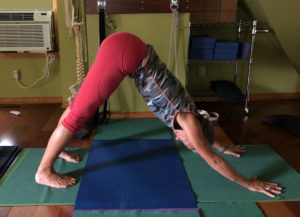
Let me share a simple example of how content versus substance is at work in my life as a yoga practitioner.  One of the asanas or yoga poses most feared by beginners is arm balance or handstand.  As many of us learning to master this pose discovered, our fear of the pose has little to do with not being physically strong enough (external content) to hold our body weight on our hands.  Our fear accompanies the need to completely surrender control (internal substance) from the moment we take the leap of faith by kicking our feet off the ground and turning our world upside down until we come to rest balanced on our hands.

This differentiation between content and substance is one of the fundamental reasons for not chasing after our thoughts while meditating.  For those of you who have noted your thoughts during meditation, you discovered the mind’s ability to release nonsensical information as part of its processing job.  Stilling the mind allows you to reach below the illusion of the surface content and access the essence of your experience from the unconscious mind.

Fear imprisons us in a very small set of responses.  Our survival pattern keeps us stuck, repeating past mistakes, when in the long run the less demanding and less time consuming action is to stay conscious and feel what we fear.  Staying within the feeling of fear for as long as it takes to fully express itself and its underlying message may require five seconds, five minutes or five different attempts.  You will know because you will feel your inner experience change as your fear subsides.  The only way to be free from fear’s grip is to face it and feel it fully.  Do I still feel fear when my feet leave the ground in arm balance?  Yes, but I also feel exhilaration, and I know every time I practice the pose I am facing my fear by surrendering my need for control and thus growing my courage and confidence.

We gain strength, and courage, and confidence by each experience in which we really
stop to look fear in the face . . . we must do that which we think we cannot.
     Eleanor Roosevelt

Our avoidance of fear keeps us locked in a fight/flight behavioural pattern of confrontation and withdrawal.  This passive aggressive response amounts to playing ping-pong with our emotions where little consciousness exists and less opportunity to learn new ways.

What “unwanted habits” are you aware of?


Brainstorm a list of unwanted habits you find yourself expressing . . .

(smoking, shyness, drinking, argumentativeness, eating, verbal aggression, gambling, physical aggression, nail biting, narcotic highs, constant motion–like foot tapping or finger drumming, clenching your muscles, twisting your hair, grinding your teeth, cracking your knuckles, numbing out with TV or computer games, binge shopping, constantly needing to have something to do, etc.).

_______________________________________________________________________

_______________________________________________________________________

_______________________________________________________________________

_______________________________________________________________________

In my experience, all my habits were symptoms of the same source.  Because unwanted behavioural habits are triggered by fear, by identifying them we can begin the process of uncovering our fears.  We thereby bring them into our consciousness so we can choose whether or not to continue their use.

For each habit you listed above, ask yourself:

“What am I afraid of that keeps me repeating this behaviour?”


_______________________________________________________________________

_______________________________________________________________________

_______________________________________________________________________

_______________________________________________________________________

Once you are aware of your fears, ask yourself the following question:

“What would love do instead?”


Choose to act from a place of love.

Coming Together or Coming Apart

Just as our global society appears to be coming together through shifting values and social paradigms so it appears to be coming apart at the seams with crumbling social institutions — government, education, healthcare, etc.  Such duality of experience is part of the process when society finds itself in the midst of “fundamental and irrevocable” change agrees HBR blogger Nilofer Merchant.  Through communities of purpose, proximity, passion, practice and providence, Merchant claims the emerging “social era will reward those organizations that understand they can create more value with communities than they can on their own.”  Of course the proverbial question is, “How do we create these communities when we are still busy creating winners and losers in particular wars?”

http://www.bigfoto.com/themes/human/hands/hands-age-z4x2.jpg

Coming-into-unity requires a different set-up of beliefs (values) and behaviours (principles) than our more familiar practices of command and control, hierarchy (power ranking), centralized decision-making, competition, dominance, exploitation, protectionism, secrecy, fear.  My community of practice, the Socio-technical Systems Roundtable (STS-RT), is grappling with this question as we reinvent and redesign our organization into an Issues-based Eco-system (IBES).  Our innovation has led us to design the following dialogue processes necessary to achieve coming-into-unity:  Connect + Converse + Collaborate + Co-create = Community©

Source: STS-RT Adaptive Enterprise Team

In organizations and communities, ‘how we design’ and ‘what gets designed’ are key elements for maximizing collective capacity and establishing shared sense-making and shared appreciation.

On an individual basis, one’s participation in these communities of passion, practice or proximity requires similarly strong relationship building skills.  Whether organization-to-organization or person-to-person, building collective capacity is a necessity in this New Normal environment of interconnected volatility, uncertainty, complexity and ambiguity.  No one of us is as innovative and adaptive as all of us.  We know diversity spawns creativity, but what we are just beginning to learn is that the people we attract into our lives (or who cross our paths) all have the potential to transform us.  In Chapter 4 of my soon-to-be-published e-book, Creating Space — The Practice of Transformation, I fully support the belief that “all relationships are transformational.”  In my own experience, each of my relationships presented opportunities for me to transform aspects of my being.

Typically, these transformational relationships whether supportive or destructive led to my conscious understanding of internal blockages preventing me from loving in more fulfilling ways.  Of course, I had to choose to look with honesty into the mirror image reflected back by these individuals and in doing so I discovered who I see is me.  I projected my perceptual filter (what I believed to be true about me) onto others including onto life’s events as demonstrated in the previous chapter by the Evolution of an Experience.  I found if I liked another person, it was because what I saw in them was what I liked in me.  If I did not like another person, what I disliked in them I disliked in me.

Our ability to attract each other (sibling, parent, lover, friend, child, enemy) is the first step (often unconscious) toward understanding why we are in relation to each other and who we are in each relationship.  One of my favourite mantras, “the people I am looking for are looking for me,” helps remind me that like attracts like.  Sometimes the likeness is our contribution or strength and sometimes it is our shared need or vulnerability.  We are students and teachers of life and as such have much to share in and gain from discovering what our likenesses are.

Life always provides us with companions in each step along our journey.  Our job is to ask, “What is the reason we are attracted to each other?”

To test this belief, select two relationships in your life — one loving and one stressful.  Ask yourself the reason you are in each relationship.  Why have you attracted each other?  Your perception may not be shared by whom you selected so ask them the same question.  In other words, the reasons for the two of you being in relationship may appear to be quite different on the surface.  Dig deep until you understand what is important for you to learn from each other.

In the mirror of relationship, I have come upon three types of Way Show-ers (soul-based, seduction-by-admiration, and shadow-based), all equally important in their ability to reflect back my limitations and strengths.  Of course, it is much more pleasurable and comfortable to connect around what we believe to be the positive aspects of ourselves (shared spiritual principles and values).  It is often the Way Show-er soul-based relationships which form the foundation of our inner circle of loved ones.  Sometimes we refer to these individuals as soul mates and have developed in-depth intimate friendships, partnerships or romantic bonds with them.  An example of this type of relationship is typified with my friend, Maureen, whom I currently co-facilitate an awareness meditation, sharing and writing circle.  To help you clarify the reasons you are in soul-based relationships, identify the people in your life fitting this category and state the reasons.

My Soul-based Relationships:                     Reasons:

1.     ___________________________     ______________________________________

                                                                             ______________________________________

                                                                             ______________________________________

2.    ___________________________     ______________________________________

                                                                             ______________________________________

                                                                             ______________________________________

3.   ___________________________     _______________________________________

                                                                           _______________________________________

                                                                           _______________________________________

My Pattern or Theme as Reflected in my Soul-based Relationships:

___________________________________________________________________________

___________________________________________________________________________

___________________________________________________________________________

Below is a partial list of characteristics I saw in my soul-based relationships and therefore in myself.


It is important for each of us to note what feelings are triggered when we apply these characteristics to ourselves.  When I first considered the list as describing me, I felt as though I was being arrogant.  It was difficult to claim such beauty existed within me.  My inability to fully acknowledge my strengths came from believing messages like, “it’s rude to talk about yourself,” “people will think you are a braggart,” or “who do you think you are, someone special?”  Those critical messages had the impact of limiting my ability to love myself.

Reread your own list and claim your true identity.  Remember, who you see is you.  If you do not have a smile on your face and a warm feeling of love in your heart by the time you finish, go back and read the list until you do.  Let the “parts” of yourself come-into-unity.

Mind Over Matter

http://www.bigfoto.com/themes/human/sport/climbing-o3r.jpg

The phrase “mind over matter” reminds me of my first year university English Literature class.  My 1972 hip and eccentric professor themed the year’s readings around R. D. Laing’s The Divided Self:  An Existential Study in Sanity and Madness (1960).  As a common belief of the day, the human mind was viewed as the champion while the body was merely a vessel through which we used our will to manipulate the physical world.  To prove this thesis, my professor had four of the smallest students, me being one, lift a football player (over 300 pounds) off his chair by using only the first two fingers of our hands.  Of course, when we originally tried lifting him with the benefit of our full hands, we were unable.  That demonstration of the mind’s power stayed with me and influenced my choice to study psychology.

Fast forward 40 years and I am still fascinated by the intricacies of the mind and its connectedness to the body.  In today’s stress-ridden and complex world, we have discovered the body’s capacity to provide early warning signals for avoiding injury and disease.  When we ignore these preventative signals the mind is impacted negatively.  For instance, in a world where rapidly accelerated change is the New Normal, multi-tasking is a much sought after corporate productivity talent.  Interestingly, Tony Schwartz dispels this myth by claiming 25% to 50% of the workforce report feeling overwhelmed or burned out at work.  In his HBR blog, The Magic of Doing One Thing at a Time, Schwartz states we not only lose productivity by multi-tasking but “relentlessly burn down [our] available reservoir of energy” because our bodies and minds are constantly in reactive ‘fight-flight’ mode.

When neither the body nor the mind is allowed to relax and rejuvenate, one or both eventually say ‘No’ through physical or mental dis-ease.  Research by the World Health Organization (WHO) estimates by 2020 depression will be the second leading cause of disease.  Given that it affects 121M people worldwide and can be reliably treated — but fewer than 10% to 25% are — it behooves us to pay attention to what our mind is attempting to teach us.  As a survivor of depression, my experience taught me the benefits of quieting the rational mind so I could hear the wisdom of the intuitive mind.  In my third chapter of Creating Space:  The Practice of Transformation, I outline some of this experience and my own thinking on the true purpose of our mind.

During the first half of my life and a major portion of my professional career, I learned
and lived primarily through my intellectual and physical abilities.  Both were valued
more in my culture than emotional or spiritual intelligence.  In the last decade, as I
began to more fully develop my emotional and spiritual abilities, I discovered the real
purpose for my mental intelligence or my mind.  Essentially, but in opposition to how
society has operated, the mind is a servant not a master.

The intuitive mind is a sacred gift and the rational mind is a
faithful servant.  We have created a society that honors the
servant and has forgotten the gift.         Albert Einstein

The mind, very much like a CPU (computer processing unit), serves to store, organize
and retrieve information and experience.  It runs continually whether we are asleep
or awake.  During the hours we are awake, if we listen, a constant babbling of
disconnected words and phrases are broadcast.  As I listened in on my own bandwidth,
it became clear that this disjointed script was certainly not my truth.  In fact, much of
it was irrelevant if not ridiculous.  The more I listened, the more I would catch myself
laughing and ponder, “Where did that come from?”  Listening in on my mind’s prattle
confirmed for me that I was more than my mind and self-mastery was not an
exclusively mental process.  In navigating the first 40 years of my life with mainly my
mental processes, I often missed out on “hearing from” the more creative aspects
accessed through spiritual, physical, emotional and relational experiences.  No
wonder life felt like a struggle.  In order to move from exhaustion to effortlessness, I
needed to tap into my entire resource bank, which required me to create space in my
conscious experience for more than my mind.  However, my chattering mind was
already taking up most of the available space and a larger question loomed before me,
“How was I to gain control over these endless thoughts that also seemed to have a
mind of their own?”

My initial step was to begin dumping this garbled script into an imaginary “garbage
out” bin.  When I found myself conscious of a thought that no longer fit with who I
wanted to be, I would cancel it out and replace it with a new, aligned thought.  In time
I realized I was consciously facilitating a process already begun by my mind, that is,
creating space for new possibilities by bringing to the surface and expunging what
was no longer needed.  At the same time as I was creating space for my truth to
emerge, I was becoming “mindful” of my inner experience.  Eckhart Tolle calls this
“the beginning of the end [. . .] of involuntary, compulsive thinking.”

When a thought subsides . . . you experience a discontinuity in
the mental stream . . . a gap of “no mind”.   At first the gaps will
be short . . . then gradually they will become longer.  When
these gaps appear . . . you will feel a certain stillness and peace
inside you.

This is the beginning of your natural state of Oneness with
Being . . .  With practice . . . the sense of stillness and peace
will deepen . . . in fact there is no end to Its depth.

You will feel a certain subtle emanation of joy arising from
deep within . . . The Joy of Being.   In this state of Inner
Connectedness . . . you are much more alert, more awake

than in the mind-identification state.  You are fully Present . . .  
It also raises the vibratory frequency of the energy field
that gives life to the physical body.             Eckhart Tolle

Herein lies one of the greatest benefits for quieting the monkey chatter of the ever-processing mind — we literally uncover our inner sense of joy.  Joy is buried at our core and once we dig deep enough to connect with the essence of joy from which we are all created, then the mind is serving its true purpose.

Close you eyes.  Ask yourself, “What brings me joy?”  Sit quietly until your intuitive mind offers up its answer.  Remember if something from outside of you surfaces as an answer, then your rational mind has spoken and opted for ‘thrill seeking’ instead of joy (impulse instead of intuition).  Try again, the answer lies deeper than the surface of your mind.

No Pain, No Gain


http://bit.ly/Apiabq

In the early 80s, the marketing slogan “no pain, no gain” became the motto for exercising the body’s muscles to the point of fatigue where one would “feel the burn” in order to maximize athletic excellence.  Although popularized by Jane Fonda, this slogan has been part of human belief systems (spiritual and physical) since the 2nd century.   As Benjamin Franklin (1758) wrote in The Way to Wealth, “industry need not wish, and he that lives upon hope will die fasting.  There are no gains, without pains . . . .”   This long-held belief, that pain, struggle and hard work were the necessary requirements for a life lived successfully, was the foundation from which our work ethic emerged.

A more contemporary consideration of the same idiom reveals it as a myth.  In the words of author and physical trainer, Harley Pasternak

Many people think if their muscles don’t hurt, they’re not having a
quality workout.  This is way off base [. . .] pain is not required for a
successful workout.  It’s also important to note that pain can be a
warning sign of an exhausted muscle or torn ligament.

And therein lies the truth about pain.  Whether physical, spiritual or emotional, pain’s gift to us as humans is its early warning signs which, when listened to, allow us to react and spare ourselves from disease and distress.  Unfortunately, many of us ignore rather than pay attention to these early signals until heart attack, arthritis, depression or any other number of ailments are fully upon us.

In last week’s blog, I introduced the concept of spiritual awareness from the first chapter of my soon-to-be-published e-book, Creating Space—The Practice of Transformation, Volume 1. This week’s blog continues to explore the theme of awareness as a transformational tool but from a physical perspective.  As I wrote in the second chapter of Creating Space

Our bodies are tremendous communicators of pain.  When we listen to the early symptoms rather than ignoring or denying their presence we can prevent disease long before it becomes chronic and life threatening.  This is the path to becoming disease-free.

Pain is blocked energy.  What needs to pass through is unable.  Pain is holding on to the past.  What needs to be forgiven and released is stuck in anger and resentment.  Pain is a messenger telling us to open up and find its cause.  What needs to be changed is crying out for attention.  Pain is a voice calling for our awareness whether it has the shape of a blue mood, a cold sore, a headache, a heart attack, fatigue, tears or fears.

Pain is a symptom not a source of dis-ease.  Befriending the aches and pains in our body and mind allows us to listen for clues leading to their source.  When we focus on their source, we are transforming causal agents to reflect what better serves us.  This action aligns us with our soul’s calling and we feel “at one” with our inner being.  I prefer to say we are “as one” because not only are we aligned internally but also with those life forces fueling us from outside our being.  When we are as one we discover we are not alone or lonely.  Herein lies peace.  To be my own best friend is a comforting relationship where I am my listener.  As I practice listening to myself by quieting a constantly processing mind and easing a tired, tense body, I allow the wisdom of the listener to speak to me and through me.  This is still my voice but often gentler, kinder and more gracious in its expression.

Tight, tense, rigid muscles mirror tight, tense, rigid thoughts,
feelings and beliefs.

Notice in your own body where you collect strain and tension.  Allow yourself to enter the depths of whatever pain or stress you are experiencing.  Visualize opening the doors you erected to keep the pain at bay.  What is the pain trying to say to you?  Are you aware of any emotions rising to the surface?  What images, memories or thoughts accompany these feelings?  Stay with your experience as long as you are able.  Ask yourself, “What am I afraid of that is creating this stress or pain?”

Try listening to your body right now and use the following triggers to begin writing about your experience.

Today, I am tense and sore in my _________________________________________________

When I listen to this pain, I feel . . ., I remember . . ., I think . . ., I am afraid of . . .

___________________________________________________________________________

The source of my pain is ________________________________________________________

By reaching the pain’s source or cause, you bring into your consciousness what requires transformation.  Try your best to stay with the tension or pain until you understand its message.  We don’t always like what we hear which is why we avoid it.  However, this is the moment where we can choose to change the course of our lives through new thoughts, words and deeds.  Here is the moment for affirming what we want to replace the pain.  Write your intention down.  Say it out loud.  Hang it in a visible spot as a daily reminder.

What I really want is (I intend . . .) to _______________________________________________

Ask yourself as you move through your daily activities, “Does this activity affirm this intention?”  If it doesn’t, how can you change the activity to affirm what you want for yourself?

We Are All on a Spiritual Journey

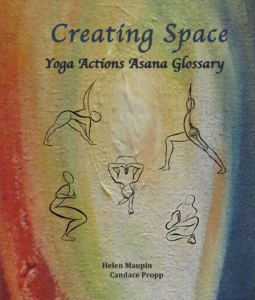
The prospect of e-publishing my latest and longest developing book, Creating Space – The Practice of Transformation, Volume 1, is close at hand.  March is my month to tidy up all the loose ends keeping me from this goal.  Because of its e-book format, it is my intention over the next several blogs, to give you a weekly peak at each of the chapters constituting this first volume.  Creating Space is a do-it-yourself handbook chronicling powerful transformation tools (awareness and inspirational writing, meditation and yoga).  At the same time, it is also an account of navigating personal and professional change in a world where the New Normal is volatile, uncertain, complex and ambiguous.

The five chapters in Volume 1 provide the opportunity to open up to, become aware of, and practice inspirational living from a whole-person perspective.  Through getting to know our spiritual, physical, intellectual, communal and emotional selves (SPICE) — one of the free Joy Tools you can receive off my website — we align ourselves to the triple bottom line of people, prosperity and planet.  These five bodies of intelligence communicate to us and through us in each and every moment.  Our job is to pay attention to (be inspired by) their messages and to follow through by taking action on our own and others’ behalves.

The focus of Chapter 1 (another free download) is about understanding and enabling our spiritual self and provides anecdotes and exercises to accomplish this goal.  If you are like me, this aspect of myself was uncharted territory and only through exploration did I discover that we are all on a spiritual journey.  Many of us lost our connection to this very wise inner essence and now seek to rediscover what spirit means to us.  For me, spirit means trusting that inspiration is the off-ramp leading to creativity.  When today’s problems can no longer be solved by yesterday’s solutions, creativity and innovation are fundamental for both surviving and thriving in this New Normal.

Below is a passage from Chapter 1, which allows you to sample some of its contents.

Inspiration, like radio waves, requires a receiver.  We are the receivers of ‘an idea stimulating creativity’.  Osho, Eastern mystic and philosopher, believed for inspiration to be ‘heard’, we must engage our feminine or receptive creative energy.  The surest way to be open and receptive is to stay conscious and connected in the present moment, and inspiration will show itself.  This mysterious force, when allowed to lead, shifts from our shoulders the great burden of feeling singularly responsible.  No longer do we have to always know what is required or right, particularly when we are uncertain of the way or means.  Staying awake in the present moment, experiencing inspiration’s voice and then acting on its guidance, is what many refer to as being ‘in the flow’ of life’s process.  Present moment awareness is where we begin to align our internal experience with the natural order and patterns of life’s flow.

It seems simple enough.  Just stay present, release the hold of the past and stop worrying about the future.  However, simple and easy do not necessarily equate because it is not our practice (habit) to live in the present.  Our conditioning tends to keep us dwelling either — 1) in the past’s repressed and unresolved scenarios often triggered by some current event, or 2) flying from one future goal to another without enjoying each of the steps along the way.  Often our habit is to bounce back and forth between both.

Try this small exercise to see for yourself.  Set a timer for five minutes.  Take a couple of deep breaths while you close your eyes and allow your attention to move inward.  Begin to watch your mind without controlling its direction.  As a new thought appears, place it into one of three storage bins — past, present, future.  When the five minutes elapse, note which of your bins is fullest.  I use this exercise periodically to assess where my focus is, particularly if I am feeling stress.

Another quick and easy method for bringing my attention into the present is to focus on where I feel energy in my body.  In my case, my feet telegraph the strongest energy signature.  It is here where I feel a continuous but subtle tingling sensation, which I can increase in volume and direction through concentration.  Conversely, if I have allowed my attention to stray into regrets about the past or worries about the future, this energetic sensation and flow reduces proportionately.

Present moment awareness is a matter of changing our habits.  Changing a habit is a matter of changing our mind and refocusing our attention in order to access our awareness of who we are, what we value and why we are here.  By keeping our attention in the present moment, we allow inspiration to speak its wisdom to every unanswered question we carry within.

Awareness means to watch, to observe what is going on within you and
around you.
     Anthony de Mello

I spent the first half of my life seeking outside myself for anything that would bring me a sense of peace — athletics, relationships, alcohol, cigarettes, food, marijuana, shopping and the list goes on.  Everything worth pursuing seemed to exist externally, and I was a great explorer always looking for the next ‘greener pasture’ but unaware of the fertile ground to be explored within me.  On the surface, it looked as though I knew what I was doing and I fancied myself as somewhat of a pioneer in my chosen profession.  All the while, lying under the surface of consciousness, I held this limiting belief — I couldn’t possibly be smart enough to have all the answers I sought within me.  Even though I was raised to believe I could be, do and have anything I wanted, I never translated it to mean everything I sought could be found by listening to me, to all of me.

The way and the truth is within.  It has always been so and will always be so.
When you have learned to live in the truth, you will never need to defend
yourself again.
     Ron Rathbun

When I first read Rathbun’s passage, I had no idea what he meant by “the way and the truth is within” but I felt a strong urge to find out.  I began my journey within by experimenting with guided visualization and meditation.  Both techniques emphasize concentration, mindfulness and positive emotional expression.  Although I enjoyed guided visualization exercises, I soon felt restricted by their imposed structure and chose the greater flexibility afforded in meditation.

Throughout the first year of my meditation practice, I consistently experienced my consciousness leaving my body.  Although I was awake and aware for the duration of each session, my predominant sensation was one of exiting my body at the session’s beginning and re-entering at its end.  In addition, it was impossible not to notice my complete absence of back pain during meditation.  This relief and relaxation was my first taste of peacefulness.  I remember feeling disappointed when my meditation experience unexpectedly changed and I stopped ‘flying’ out of my body.

Interestingly enough, the pain-free body and peaceful mind stayed with me.  Here was a cause and an effect that I could see in operation.  The more I meditated, the less overall tension I experienced in my body, the calmer and gentler I became.  Meditation alerted me to my body’s ‘voice’.  As I listened to it speak its pain and pleasure to me, I was increasingly more responsive to its needs.  This is what it means to be grounded in the present and in one’s body.  And when meditation turned into a daily practice, I saw much more than past wounds being healed.  Turning inward through meditation revealed the truth, and my truth became a real experience opening me up to develop the most important relationship of my life, that with myself.

Did anyone ever say to you,  “The most significant relationship you will develop is not with your parents or life mate, but with yourself?”  Trial and error led me to trip over this truth.  If you want to be more conscious about choosing, get to know yourself.  How is your relationship with yourself?  Do you know who you are, what you are passionate about?  Do you recognize the ‘voice’ of your spirit?  Do you feel aligned with Life’s flow and purpose?

More Joy Tools!

Anxious, confused, blocked? Uncover your ideas and open the door to WOW—wonder, opportunity, wisdom.


See Helen in Cover 2 Cover

Follow Me On:

Twitter TwitterLinkedIn LinkedInFacebook FacebookYouTube YouTube

Subscribe to our RSS Feed