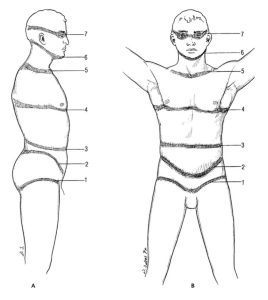
In yoga philosophy, human beings have three bodies — the gross or physical body, the astral or subtle body, and the causal or spiritual body.
Here is a breakdown:
- The Gross/Physical Body is the tangible, physical body (Annamaya Kosha) made of flesh, bones, blood, etc., seen with the eyes and experienced through the senses. Our gross body is made up of five elements — earth, water, fire, air, and ether (akasha/space) — which is why we need daily doses of each to grow and stay healthy.
- The Subtle Body contains the mind, wisdom, ego, and life-force energy (Prana), forming the mental-emotional and energetic layers (Manomaya, Vijnanamaya, Pranamaya Koshas). This layer of being underlies our physical body, bridging it to our spiritual body. It is the source of our thoughts, feelings, and actions, and where our energy channels (nadis and chakras) lie.
The subtle body is made up of 19 elements:
5 Organs of Action: organ of speech, hands, feet, genitals, and organ of excretion/anus
5 Senses of Knowledge: to feel, to taste, to smell, to hear, and to see.
4 Elements of Antahkarana: internal faculty connecting consciousness with the external world, that is, the mental machinery processing thoughts, emotions, decisions, and experiences, creating subjective reality.
5 Vayus: governing winds/pranas — udana, prana, samana, apana, and vyana. - The Causal/Spiritual Body is the deepest body, linked to the soul and bliss/joy (Anandamaya Kosha). Dr. Ram Jain specifies that this “body continues through all your lives and stores subtle impressions, in the form of karma, of everything that has happened to you in this life and past lives. This means that the causal body determines the development of the gross and subtle bodies in the next life.” When human death occurs, the spiritual body reincarnates with a new physical and astral body.
Yoga asanas (postures) and meditation enable us to balance the five elements of the physical body. In my practice and teaching, I use yoga actions such as aligning the inner and outer trochanters of the thigh bone to bring about such balance. Focusing one’s awareness on specific aspects of the physical body furthers the inner journey of self-discovery and concentration. The anatomical complexity of the physical body can provide a lifetime of learning, and this may be where you wish to remain in your yoga practice.
However, if you choose to dig deeper into your being and your understanding of who you are, your subtle body unveils even more learning and mystery. As an example, and staying with the notion of practicing yoga actions, working with a subtle action can simultaneously balance several physical aspects. For instance, if you can sense and create space between the bottom of the sacrum and the top of the tailbone, you will feel the inner and outer trochanters come into balance, the thigh bones ground into the back of the legs, the lower abdominals scoop in and up toward the navel (engaging the mula and uddiyana bandhas), the apana vayu charge the legs with strength, the spine lengthen, and the shoulders release away from the ears. All of this balancing (stability and ease), and likely more, with only one subtle action.
In essence, the closer our yoga practice can take us to “working” with our causal/spiritual body, the closer we are to knowing the source of any suffering (habits, injuries, etc.) that is a part of our being. Otherwise, we expend our energy on symptoms located in the physical body, which may subside from our attention and action, but will also likely be replaced with other physical symptoms, potentially taking us down a bottomless rabbit hole.
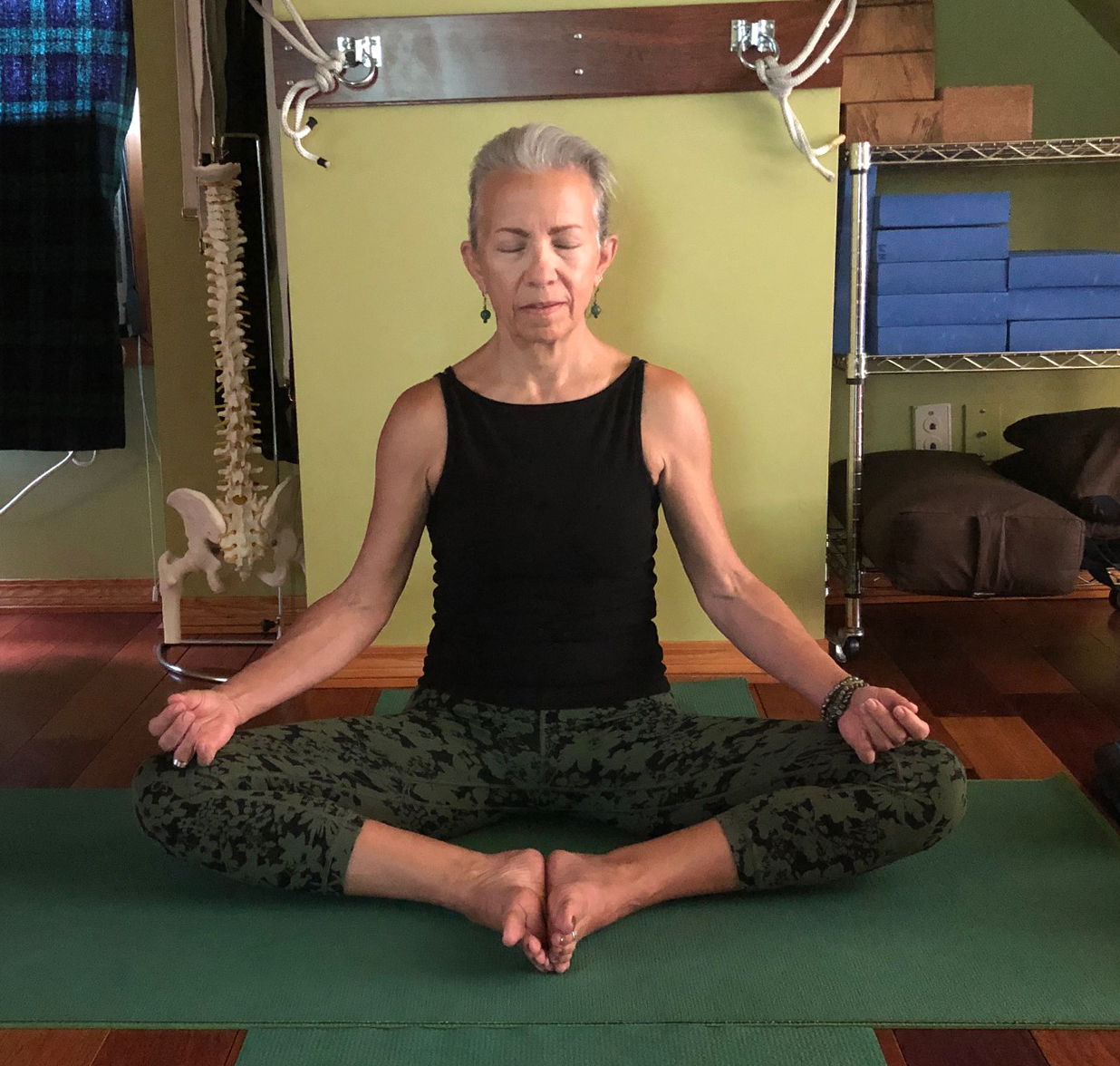
But don’t take my word for it. Here is how you can find out the truth. Come into Baddha Konasana by sitting on a bolster or stacked blankets with your back against a wall. Use the two sets of yoga actions in sequence to test your own experience, physically and subtly.
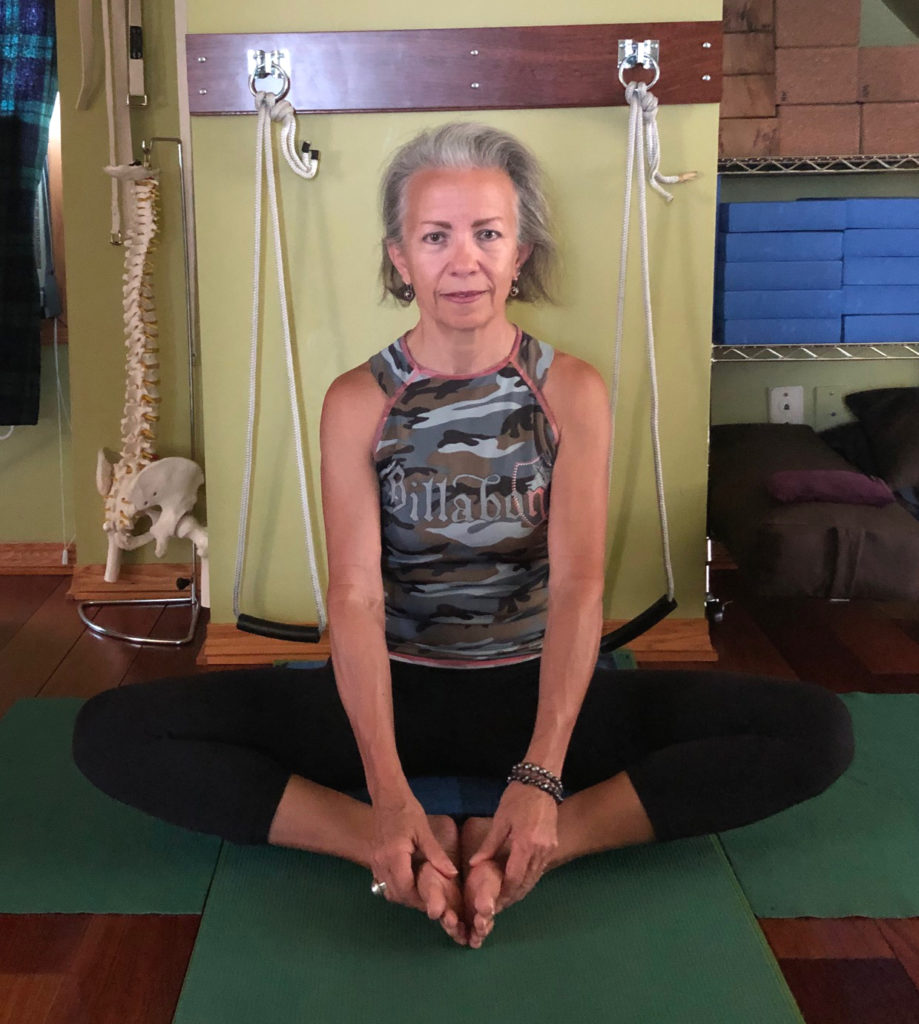
Physical Yoga Action:
1. Find the inner/lesser trochanters at the top and inside of each thigh bone and stack them directly over the outer/greater trochanters. This is the external rotation of the heads of the femurs.
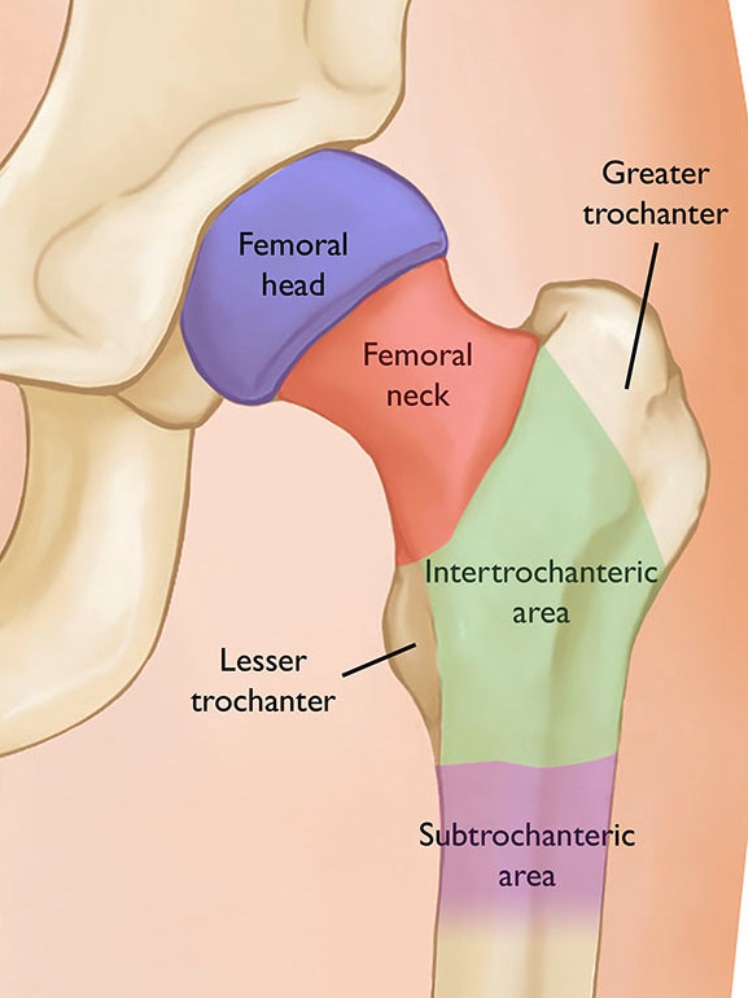
2. Sit in Baddha Konasana with this action while you notice your inner experience.
3. Now try the above two actions in Tadasana (Standing Mountain Pose).
Return to sitting in Baddha Konasana for the subtle action below.
Subtle Yoga Action:
1. Find the joint at the bottom of the sacrum and the top of the tail bone (in green). Use your breath and awareness to create space between these two portions of the spine.
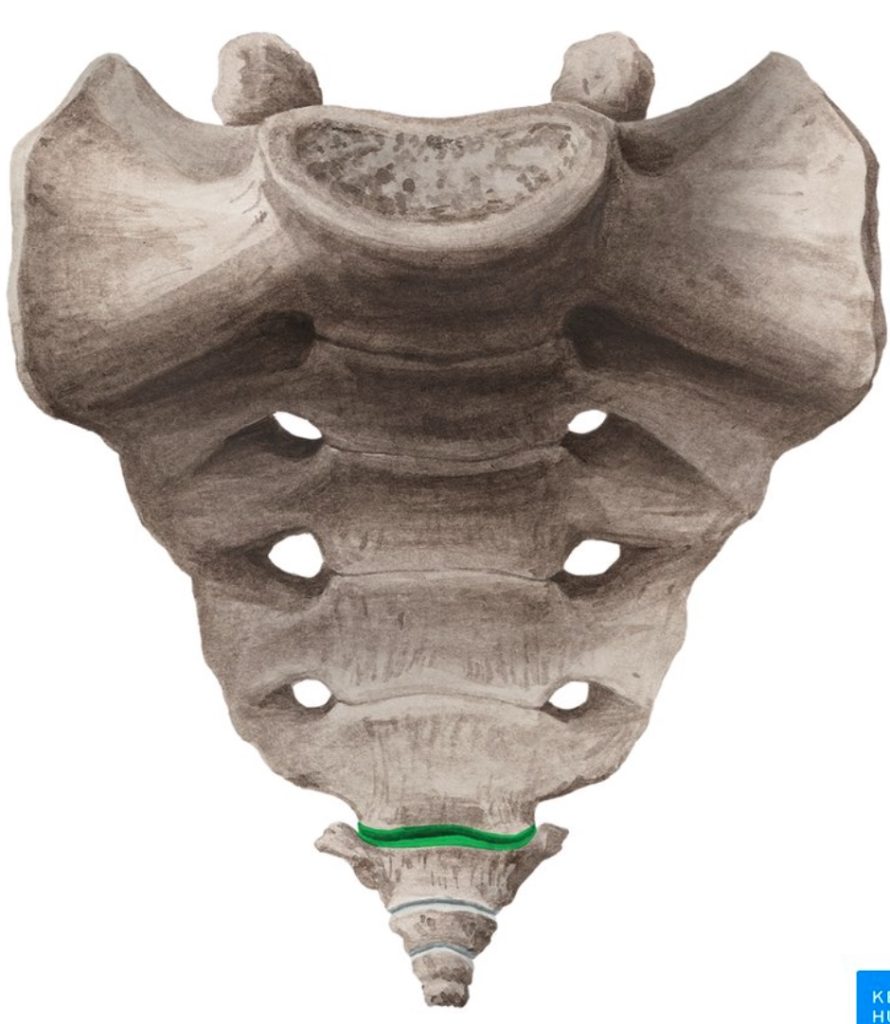
2. Again, notice your inner experience. You may want to stay for 2 or 3 minutes to discover what is occuring.
3. Now try the above two actions in Tadasana (Standing Mountain Pose).
For more yoga actions and teachings, click here. Namaste.