
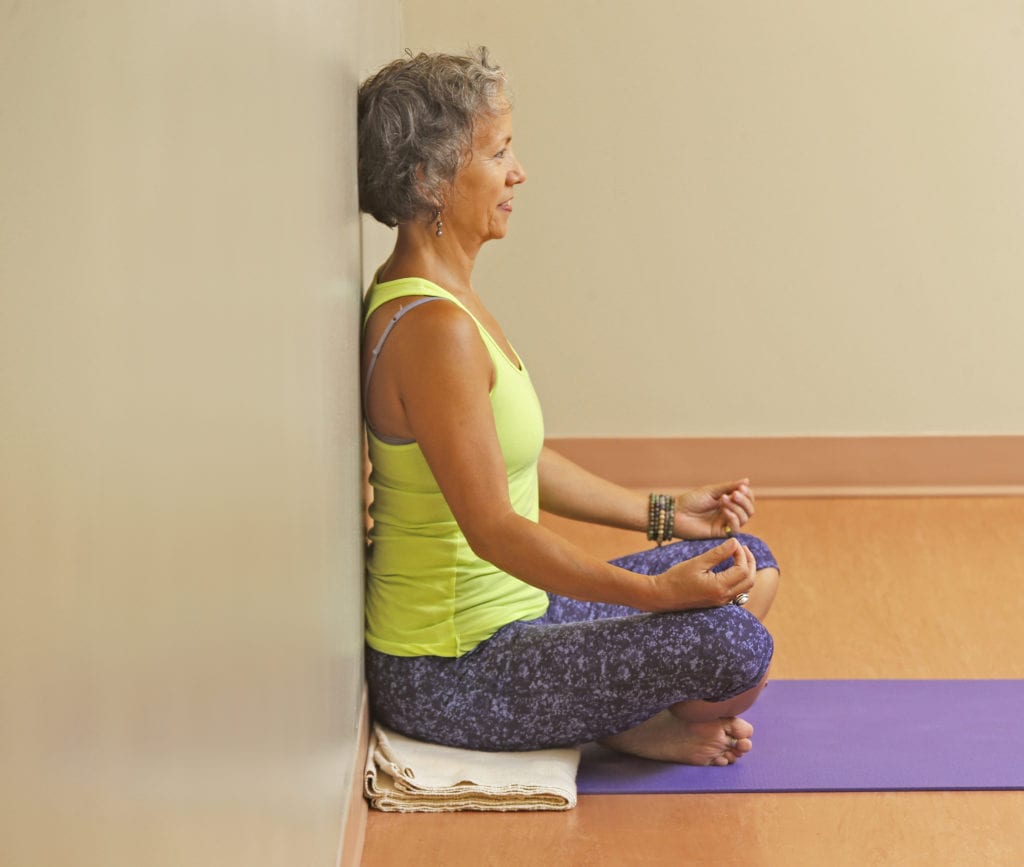
Breath as a Regulator of Mental States
The breath is the most accessible tool we possess for altering our internal state. In the context of the subtle body, the breath is the bridge between the physical body and the energetic-mental/emotional-spiritual body. When we are depressed, the breath often becomes stagnant or restricted. This restriction mirrors the lack of flow in the subtle body. Yogic breathing, or pranayama, offers specific techniques to modulate the nervous system. Both techniques below are considered safe daily pranayama practices for all levels of yoga practice.
- Ujjayi Breathing: Often called victorious breath, this technique involves a slight constriction at the back of the throat, creating an audible, soothing sound. The focus required to maintain this breath acts as a form of active meditation, keeping the mind anchored in the present moment rather than drifting into the future or dwelling on the past. Keep the Ujjayi breath gentle and without force.
- Extended Exhalations: The exhalation is directly linked to the parasympathetic nervous system, which is responsible for rest and digestion. By focusing on making the exhale longer than the inhale, we can gently encourage the body to exit the fight-or-flight response of the sympathetic nervous system, which is where many of us live 24/7. This practice is not about suppressing emotions; it is about providing the nervous system with the resources it needs to process those emotions from a more stable foundation.
The practice of pranayama does not require special equipment or a specific environment. It can be practiced while sitting in a chair, lying in bed, or moving through a room. It is a portable, internal technology that empowers us to modulate our own physiological arousal levels.
Cultivating Stillness and Awareness
Perhaps the most challenging aspect of yoga for those dealing with depression is the practice of stillness. Savasana (Corpse Pose) is often considered the most important pose in a yoga sequence, yet it can be the most daunting. For a mind tormented by intrusive, negative thoughts, lying still can feel like inviting the darkness to take over.
However, when practiced with support, stillness becomes an act of deep rest and radical self-care. The use of props such as blankets, pillows, or bolsters can make the body feel swaddled and safe. This sensory input—the feeling of weight and support—can be deeply soothing to a dysregulated nervous system. In this state of supported stillness (see postures below), we then practice the art of observation. We learn to notice our thoughts as if they were clouds passing through the sky, rather than defining characteristics of our identity. Watching and letting go of our attachment to these passing thoughts creates space for stillness and awareness to take root and expand. In essence, we are opening up to experience and understand our subtle body functions — energetic reactions, mental-emotional reactions, and intuitive responses. The more we let go of our conditioned reactions to life, the more space we create for truth/wisdom to emerge. With practice, our intuitive responses, rather than our reactions, become our guiding light for living.
In the following poses, practice the Extended Exhale pranayama by counting the length of your Inhale and then adding an additional 1 or 2 count to your Exhale. As an example, if your inhale breath is a 3 count, then make your exhale breath a 4 or 5 count. If you are experiencing breath starvation or restriction, you may need to shorten your inhale and exhale counts. Watch for the emergence of gentle ease and stillness.
SALAMBA BALASANA (Supported Child Pose) 5 minutes each side of face
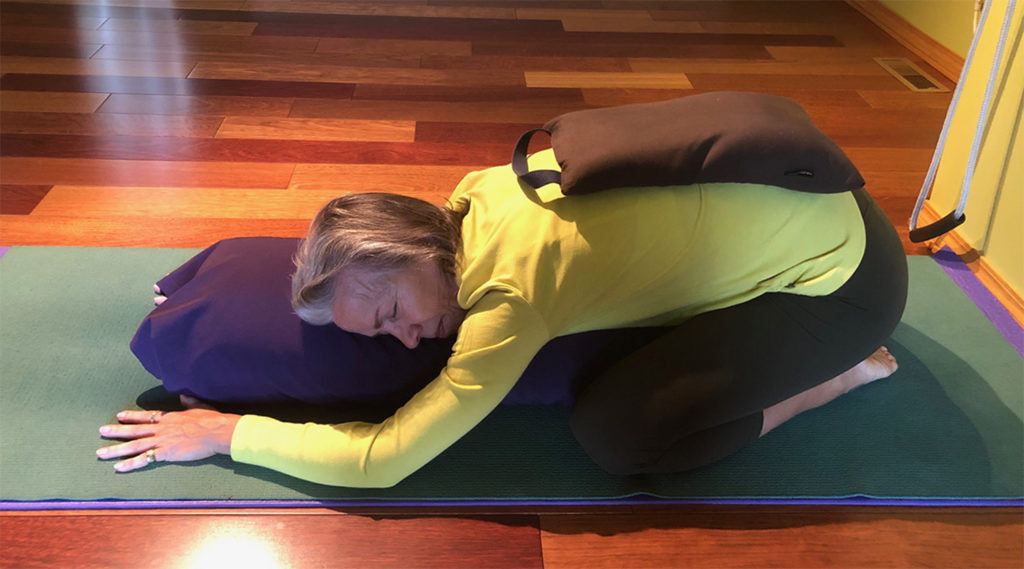
SALAMBA BADDHA KONASANA 5-10 minutes
– an eye pillow quiets the mind
– sandbags or small weights on the wrists ground the arms
– support behind the head so the nose is glancing down toward the breast bone
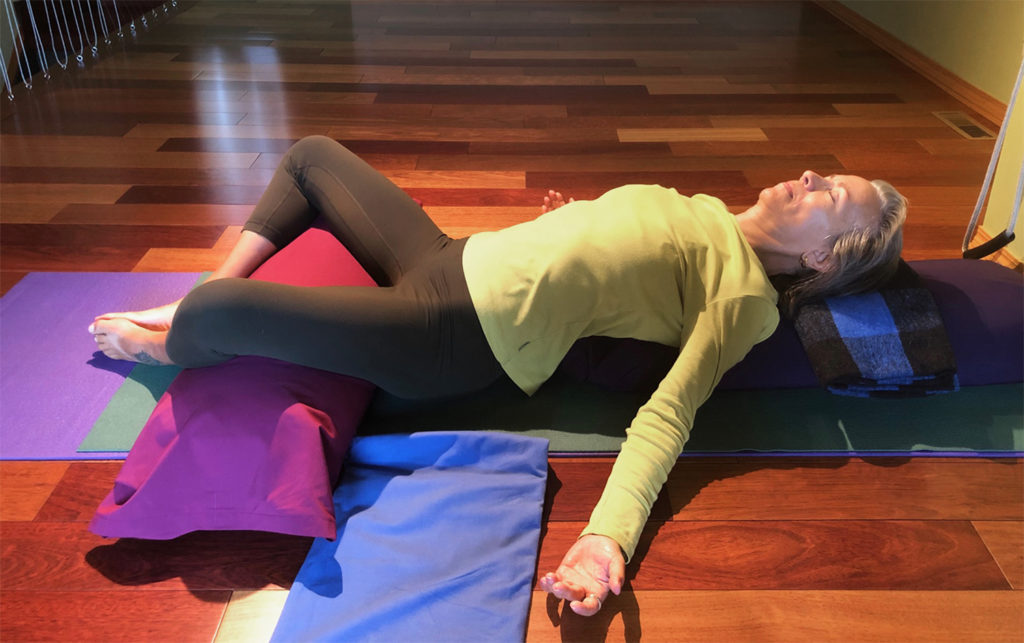
SALAMBA SETU BANDHA 5 minutes
– end of bolster behind lumbar thoracic join
– back of shoulders rest on mat
– belt thighs or calves if legs roll outward
– place blankets under shoulders and head if shoulders do not reach the mat
– an eye pillow quiets the mind
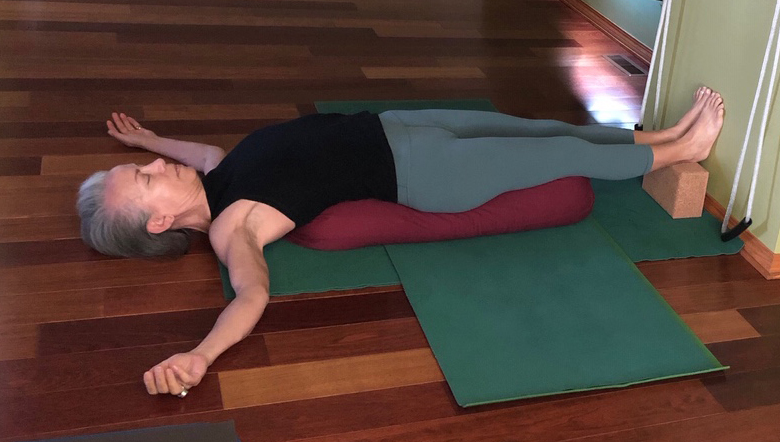
The next time you practice these poses, you may want to substitute the Ujjayi breath. Again, watch for a gentle ease and stillness to emerge.
These breathing techniques and poses are not suggesting that yoga replaces other necessary professional interventions. If you are struggling with severe symptoms, it is vital to consult with a medical professional–your doctor, psychologist, or psychiatrist. Yoga, as a holistic practice, is most effective when woven into a complementary support plan that bridges the gap between clinical treatment and daily self-management.
Toward a Sustainable Practice
The journey out of deep depression is rarely a straight line. It is a process of small, iterative actions that slowly shift one’s internal landscape. The goal of integrating yoga into your life is not to “fix” yourself or to achieve a specific aesthetic goal. Instead, the aim is to create a reliable, repeatable practice that offers a reprieve from the intensity of your symptoms.
Start small. A 5-minute practice of mindful breathing (Ujjayi or Extended Exhales) in the morning is more valuable than a 60-minute class that you feel guilty about skipping. Consistency is far more important than intensity. Focus on how a particular movement makes your body feel, rather than how it looks. If a certain pose does not feel right for your body in the moment, honor that. Modification is not a sign of weakness; it is a sign of deep self-awareness and respect for your current experience.
In Conclusion
The map of the subtle body is not a fixed geography; it is a fluid, responsive system that changes based on how we move, breathe, and direct our attention. For those navigating the challenging terrain of deep depression, yoga offers a way to reclaim the body as a place of refuge rather than a source of discomfort. Engaging in gentle movement, regulating the breath, and practicing compassionate stillness begin to shift the internal weather, creating small openings of light even in the densest fog.
These practices provide you with a sense of control and presence that can be incredibly empowering when you feel lost in the shadows. Remember that this is a process of slow transformation. Be patient with yourself. Celebrate the days when you can show up for yourself, even if only for a few moments, and extend the same grace to the days when you cannot.
For more yoga actions and teachings, click here. Namaste.