
The human experience often feels like a navigation through shifting landscapes. When that landscape darkens into the heavy, persistent fog of deep depression, the journey can feel impossible. While modern medicine provides essential tools for mental health, many individuals seek complementary practices to reclaim a sense of agency and physical presence. Yoga, often misunderstood in the West as merely a series of physical poses, offers a profound holistic framework for understanding the connection between our mental-emotional-energetic state and our physiological experience. By exploring the concept of our subtle body, we experience how intentional movement, breath control, and stillness alleviate the debilitating symptoms of depression.
The Subtle Body in a Modern Context
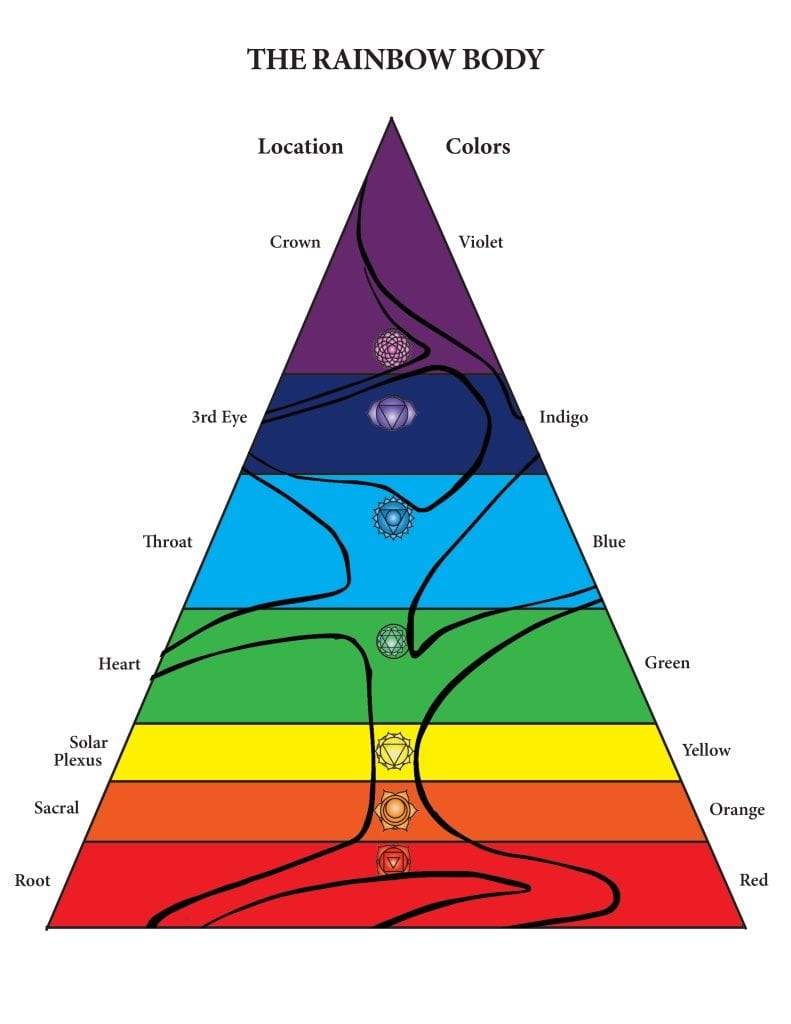
In the tradition of yogic philosophy, the human being is not limited to the physical anatomy of muscles, bones, and organs. Instead, yogic texts describe the subtle body, or the sukshma sharira, as the energetic framework that underpins our physical form. This system includes the nadis (energy channels) and the chakras (energy centers). The experience of deep depression often manifests as a sensation of stagnation, a heavy inertia, or a feeling of being disconnected from one’s own body.
From a contemporary perspective, we can view our subtle body through the lens of the nervous system and the endocrine system. Depression often keeps the body trapped in a state of chronic sympathetic nervous system arousal or, conversely, a shutdown response known as the dorsal vagal state. When the body feels like a prison of numbness or agitation, yoga actions serve as a gentle bridge. They do not force the mind to think differently; rather, they use the body as a grounding point to shift the internal atmosphere. By awakening the physical form, we influence the energetic and neurological layers, creating small, manageable openings in the heaviness of depression.
Incorporating Yoga Actions
Yoga’s physical practice of asana acts as a mechanism for nervous system regulation. For someone suffering from deep depression, the idea of a vigorous exercise regimen can be overwhelming. However, the beauty of yoga lies in its scalability. The objective is not to achieve a perfect pose but to cultivate awareness and movement in a way that respects your current capacity.
Grounding Through Asana
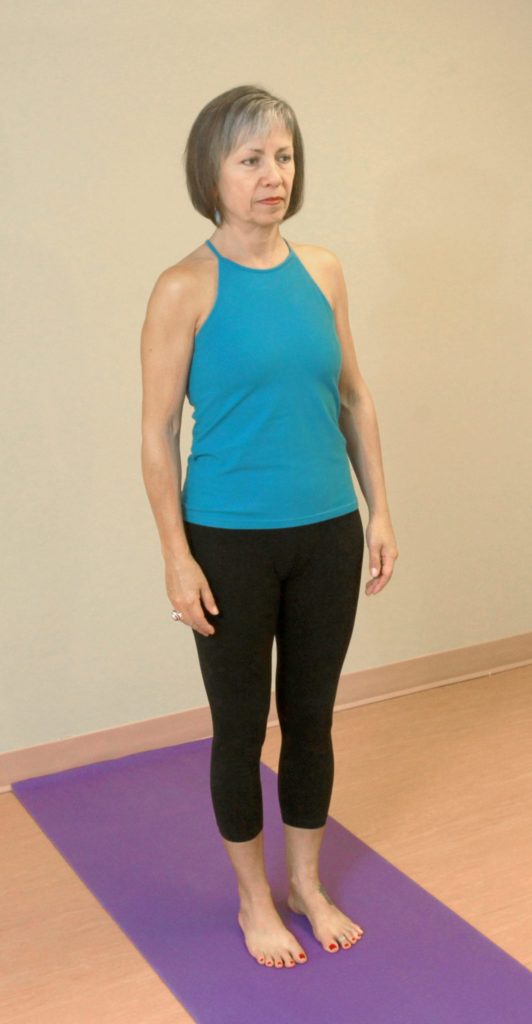
Depression often creates a sense of dissociation, where the mind feels detached from the body. Standing poses such as Tadasana (Mountain Pose) or Virabhadrasana II (Warrior II) require active engagement with the floor. By focusing on the contact points between the feet and the earth, we send signals to the brain that the body is present, supported, and safe. This intentional engagement can help interrupt cycles of rumination. When we hold a pose with awareness, we move from the abstract, often painful world of thought into the immediate, tangible world of sensation.
In the poses below, practice the following Yoga Actions:
YOGA ACTIONS for the Physical Body:
- With your awareness, gently (not aggressively) press the big toe mounds and baby toe mounds equally into the floor.
- Now, press the inner heels and outer heels into the floor. Notice how this impacts your posture and pose.
- Finally, can you balance the amount of pressure between each foot’s toe mounds and heels; both feet?
YOGA ACTIONS for the Subtle Body:
- Find your balance on the four corners of each foot.
- Create a diagonal line between the big toe mounds and the outer heels. Notice if these two lines are equal in length.
- Create a diagonal line between the little toe mounds and the inner heels. Notice if these two lines are equal in length.
TADASANA
SALAMBA VIRABHADRASANA II
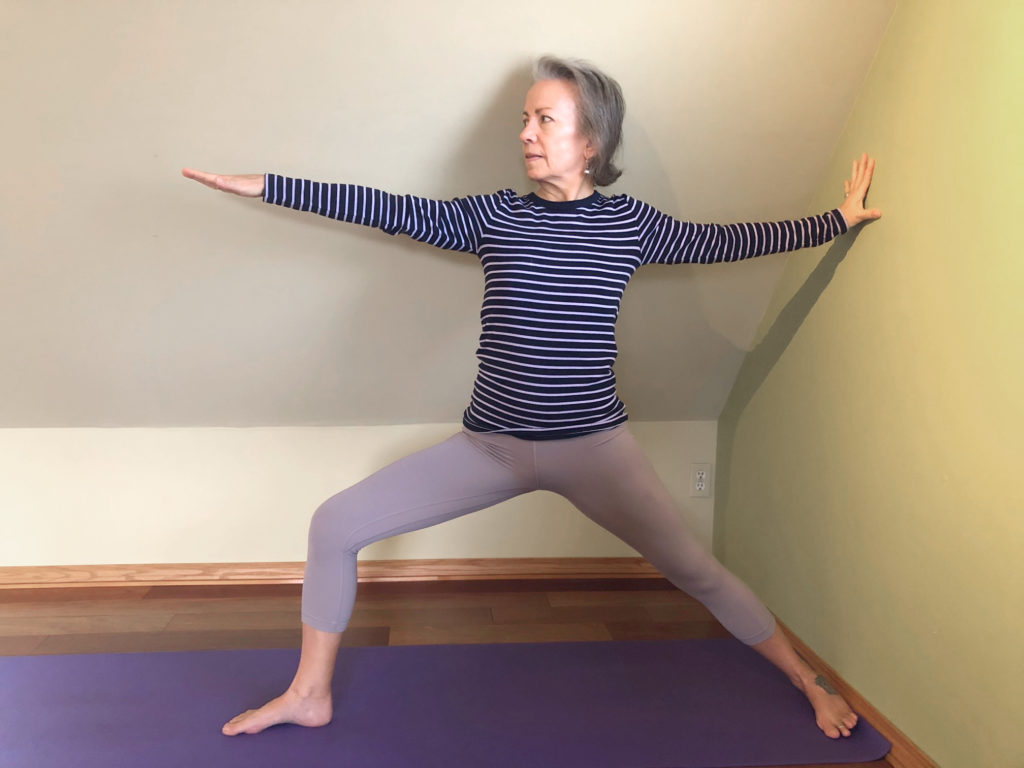
With your back foot and hand using the wall for support, repeat the above Yoga Actions for physical and subtle body engagement. Notice what impacts the Yoga Actions create in both scenarios.
Practice these Yoga Actions for the next month and watch the transformation in strength, balance, and mood.
For more yoga actions and teachings, click here. Namaste.